Sri Lanka
Neptune Travels & Tours, Australia
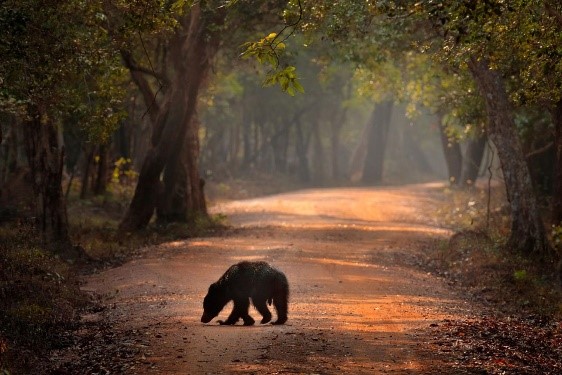 Hidden Gem 10 Day Itinerary
The Heen Ganga (Heen River) is the primary water source flowing through the isolated village of Meemure in Sri Lanka’s Kandy/Matale District, within the Knuckles (Dumbara) Mountain Range. Known for crystal-clear waters, rocky pools, and natural waterfalls, it offers, popular, rustic, and scenic water-based activities like confidence jumps, particularly near the Seven Waterfalls.
The three main traditional Sri Lankan dance styles are Kandyan, Low Country, and Sabaragamuwa. The latter two are renowned for their folklore and religious elegance, while Kandyan dance is known for its gymnastic, stylish, and energetic patterns. In addition, Thovil dance, which is a traditional, sacred, remedial and therapeutic ceremonial dance to treat one’s mental or physical illnesses, is believed to be initiated by demons. It is called devil dance, which comprises drummers, masked dancers, and fire-twirlers, who sometimes perform throughout the night to eliminate spiritual entities and heal, soothe and cleanse those who have become patients.
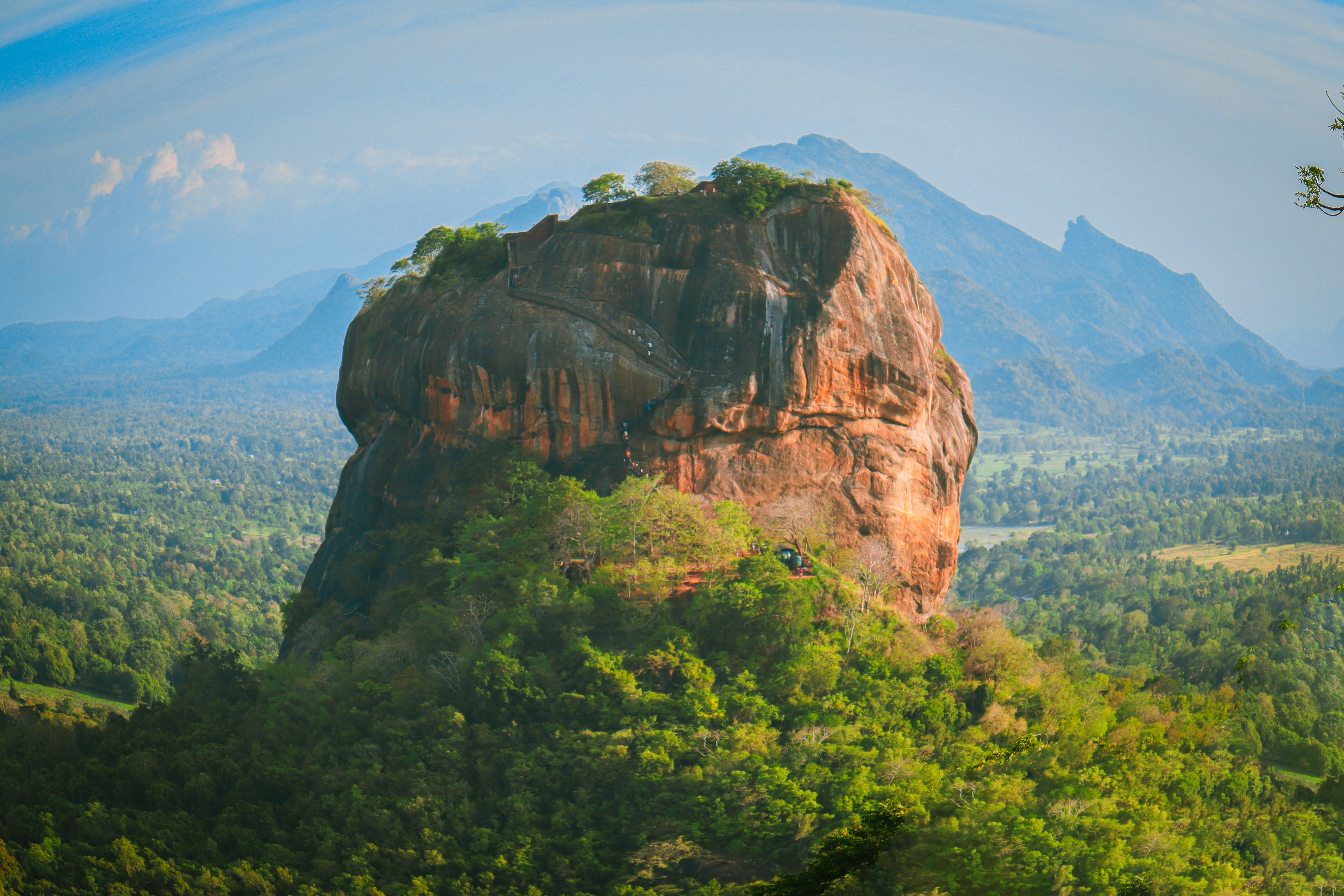
King Kassapa I (477–95 AD) built his palace, Sigiriya, or "Lion Rock," on the steep slopes and at the top of a 180m high granite peak. Comprised of its urban planning, frescoes, and water gardens, it eventually became a UNESCO World Heritage site featuring a summit citadel, landscaped gardens with functioning water fountains, and a now mostly destroyed "Lion Gate". The Sigiriya Maidens were painted on the rock face, and a "Mirror Wall" was then so polished to reflect the king's image.
Nearby, Dambulla Cave Temple, also named as a UNESCO World Heritage Site in 1991, is the largest and best-preserved Buddhist cave temple on the island.
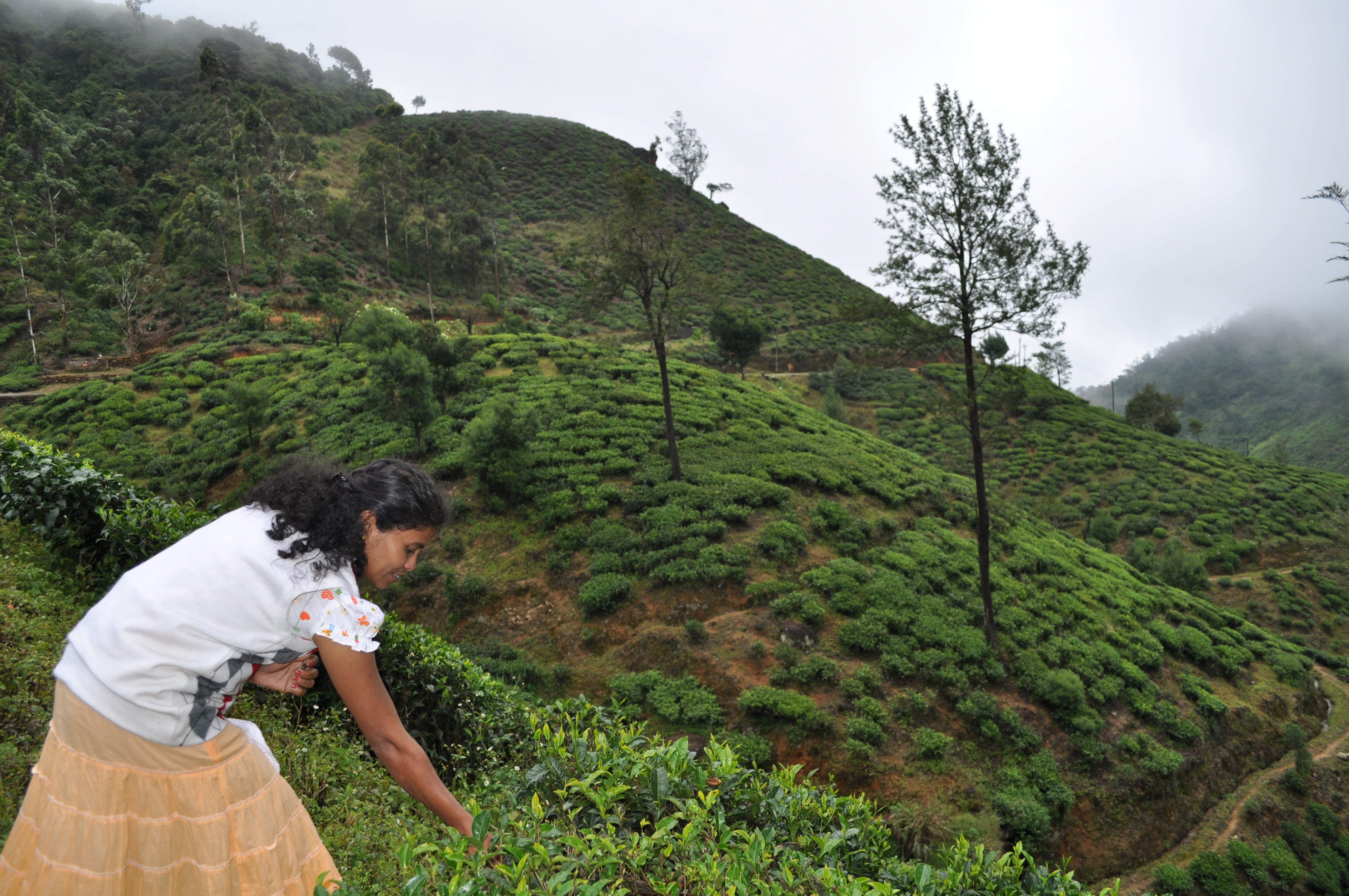 Nuwara Eliya!
The city Nuwara Eliya ("city of light", Little England, නුවර එළිය, நுவரெலியா) is located in the hill country of the Central Province, Sri Lanka. It is famous for its cool climate – the coolest area in Sri Lanka – and gorgeous, picturesque landscape. The tallest mountain in Sri Lanka, Pidurutalagala, is situated in the proximity of Nuwara Eliya city.
Nuwara Eliya soil supports tea plantations. Many waterfalls, streams, and rare flora and fauna are found in the region. It consists of a diverse culture from the fashionably dressed British to the migrant labour force, who inherited South Indian culture, linked Sri Lankan cultures, and colourful Hindu and Buddhist temples.
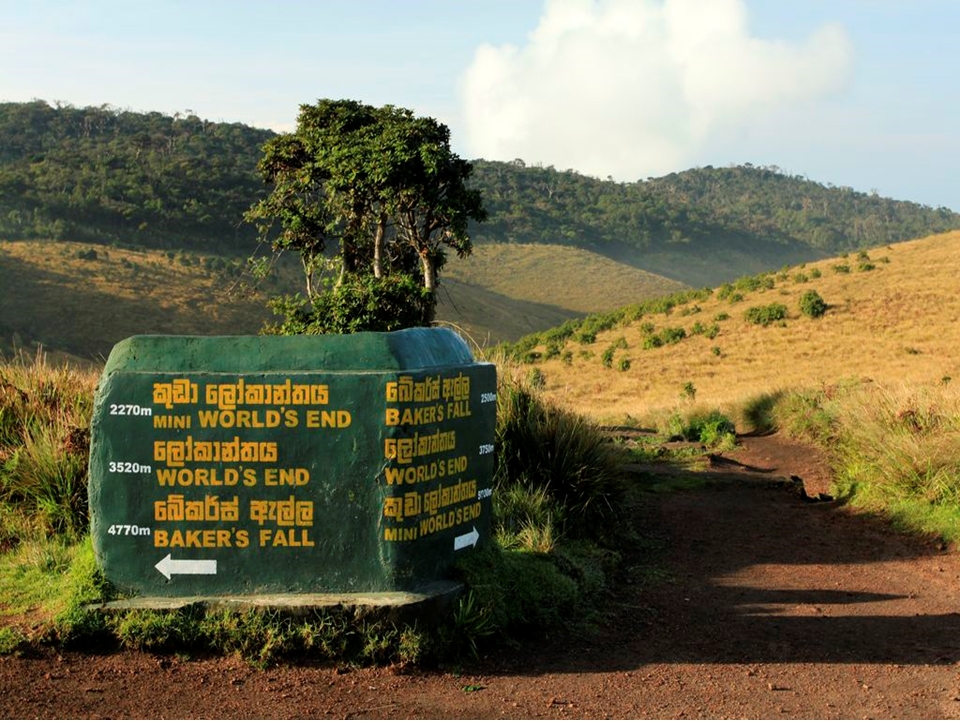 Horton Plains!
Stunning Horton Plains National Park spreading over 3.2 ha, located in a protected high-altitude plateau in Nuwara Eliya district at an altitude of 2100-2300 m above sea level, has been designated as a UNESCO World Heritage Site and is also famous for its cool climate, misty cloud forests, rich biodiversity, iconic "World's End" sheer precipice, and the roots of major rivers in Sri Lanka.
A couple of centuries ago Horton Plains National Park was a home to many mini elephants. Major Thomas William Rogers and a few other English hunters, who worked in Sri Lanka during the 1800s, wiped out the elephants from the central highlands, including Horton Plains and Thomas was killed by lightning in 1845. There is a story saying that lightning strikes his grave as well.
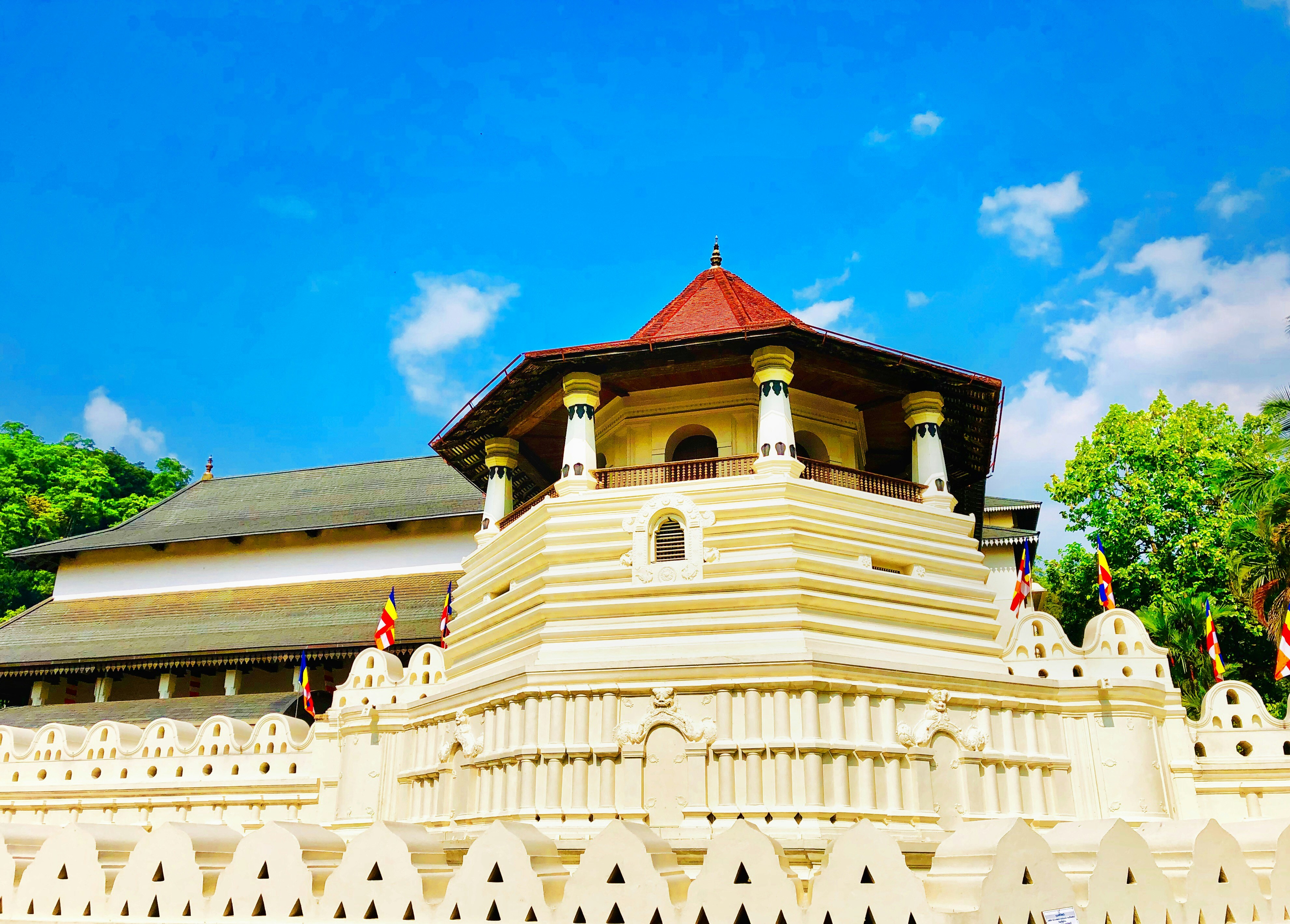 House of the The Sacred Tooth Relic!
Located at an elevation of 500 m (1640 ft) above sea level, beautiful iconic Kandy city, which lies on the island’s longest river, the Mahaweli, is the second largest city in Sri Lanka. It was the last ancient capital for the Sri Lankan kings. The Sacred Tooth Relic, which is housed and enshrined at the Temple of the Sacred Tooth Relic called “Dalada Maligawa” in the city of Kandy, is being considered to be and worshipped as the living Lord Buddha.
An annual religious and cultural celebration held in July and August, known as Esala Perahera or the Sri Dalada Perahara procession, is the festival of the Tooth Relic. The colourful Sri Dalada (tooth relic) Perahara procession includes whip-crackers and fireball acrobats at the front to clear the way, followed by Buddhist flag bearers. The first elephant leading the official segment carries Peramuna Rala (Front Official), with traditional Kandyan drummers, musicians, flag and canopy bearers, spearmen, and others performing their roles. Additional elephants, musicians, dancers, and flag bearers follow, alongside a group of singers and the Maligawa Tusker, who carries the Sacred Casket, a sacred replica of the tooth relic.

Peradeniya Botanical Garden! © Picture: Courtesy of Tripadvisor
Located in the Central Province of Sri Lanka, about 6 km (15 - 30 mins) from Kandy, 129 km from Colombo and 460m above the mean sea level, the Royal Botanical Gardens Peradeniya was established in 1821, attracting approximately 2 million local and foreign visitors annually, adding to the economy of the tourism industry. There were several plant species over 10,000, showcasing over 4,000 labelled plant species from around the world within a total Area of 147 acres.
The garden, bordering the River Mahaweli, is worth seeing as it not only offers a sanctuary for biodiversity plants but also attracts diverse bird species, butterflies, and dragonflies, and of course, a few brown monkeys found in the area. The picturesque University of Peradeniya is across the road, and the Hantana Mountain ranges are in the vicinity of the garden, visible from the university side.
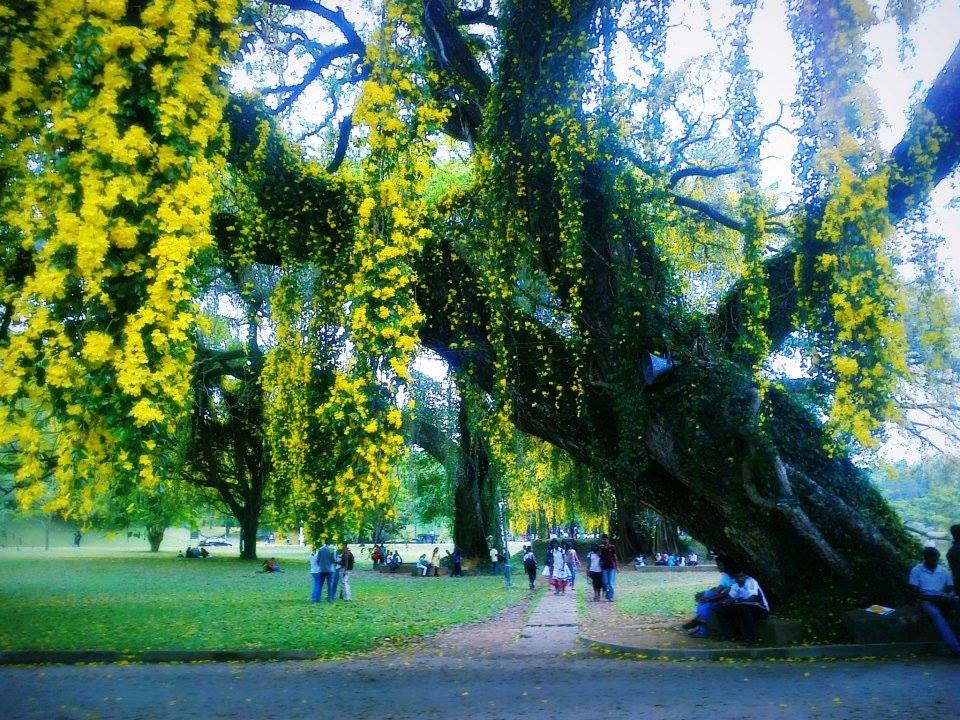 Uni Pera Peradeniya Kandy!
The University of Ceylon was established in July 1942 and shifted to the present iconic site of great natural beauty at Peradeniya in October 1952, becoming the University of Peradeniya. Adorned with picturesque gardens and prestigious architecture, the University of Peradeniya is not just a higher learning institution but a symbol of cultural heritage and natural beauty.
The Hanthana mountain range, which attracts hikers and adventure lovers who come to explore its trails, waterfalls, and viewpoints, provides additional stunning beauty to this University. Furthermore, trekking routes pass through tea estates, pine forests, and open grasslands, offering panoramic views of the university, Pearadeniya, Kandy and the surrounding valleys.
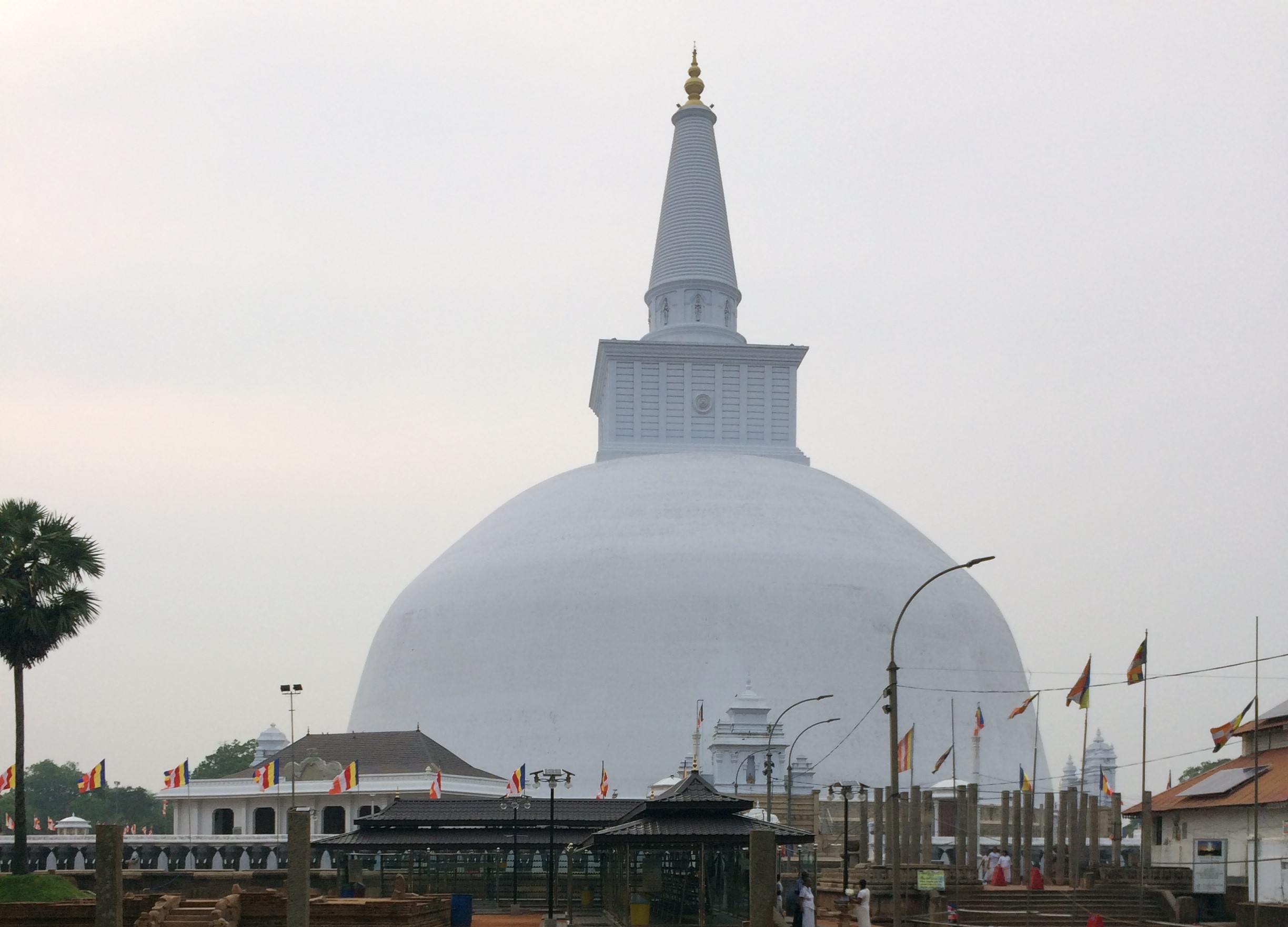
Anuradhapura! Ruwanweli Saaya/dagaba/dhātugarbha
Ruwanweli Saaya/dagaba (a dome-shaped Buddhist shrine containing relics of the Buddha) in Anuradhapura was built by King Dutugemunu during his reign from 161 BC to 137 BC. In the 3rd century B.C., the Ven Buddhist Nun (Bhikkhuni) Sanghamitta, the founder of an order of Buddhist nuns in Sri Lanka,brought a branch of the Bo Tree of enlightenment of Lord Buddha to Sri Lanka and planted it in Anuradhapura, which later became a sacred city. Anuradhapura was a political and religious capital that flourished for 1,300 years but was abandoned and hidden in dense jungle after the 993 Indian invasion by the Chola Emperor Rajaraja I’s era. Its ancient, jungle-covered ruins, including palaces, monasteries, and monuments, were rediscovered in 1820 and restored in 1870 by the British rulers of the island.
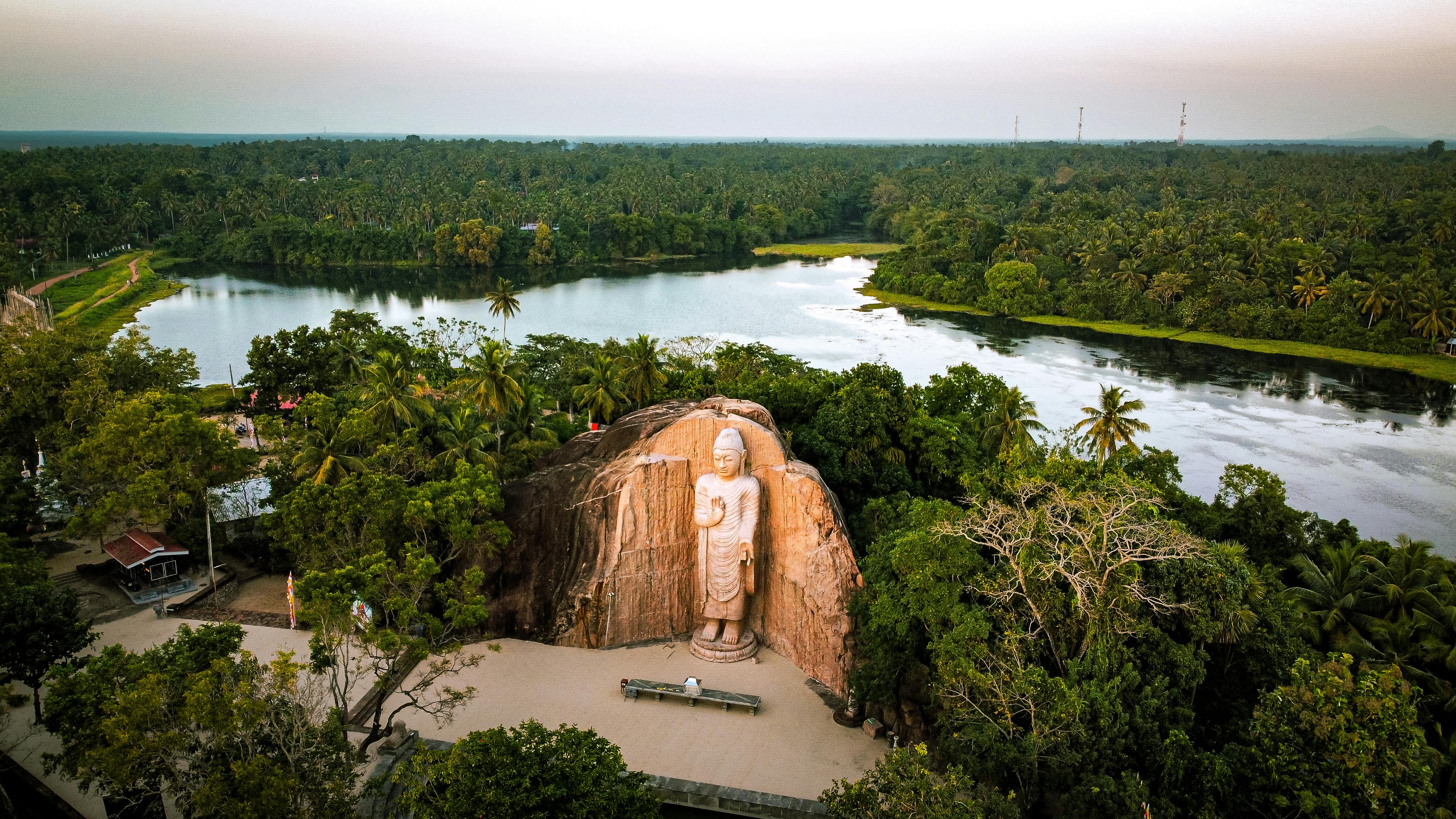
Statue of Lord Buddha at Aukana ! Ruwanweli Saaya/dagaba/dhātugarbha
The 12.8-meter-high Aukana Buddha statue, renowned for its granite robe drapery, was built in the 5th century. It showcases the high-level craftsmanship carved with natural granite rock pleats. It is located near the Kala Wewa reservoir at Kekirawa in the North Central province of Sri Lanka and is accessible via the Dambulla-Anuradhapura Road.